Eng
Eng  Монгол
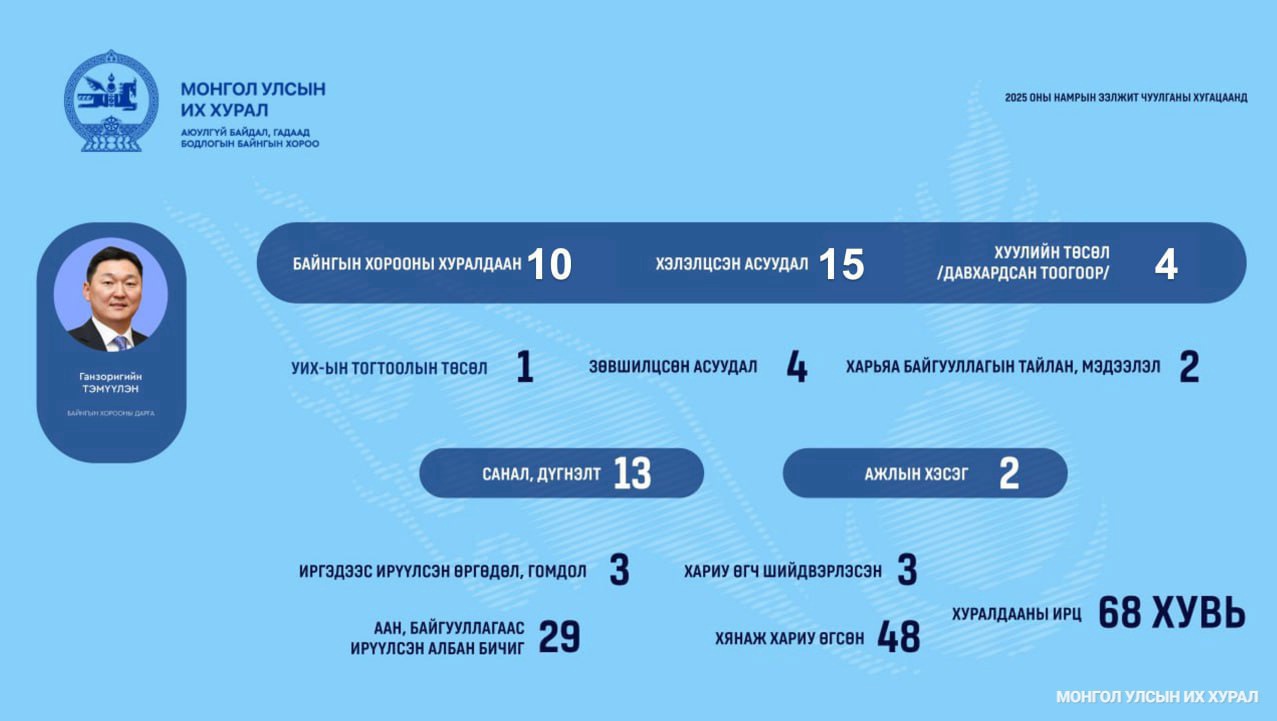
During the autumn session, the Standing Committee on Security and Foreign Policy convened eight times independently and twice jointly with other standing committees—ten meetings in total—and discussed and resolved 15 issues within its area of responsibility. During this period, the Committee prepared and submitted four draft laws and one draft resolution of the State Great Hural to the Plenary session for approval.
The Committee also discussed three issues related to consulting on international treaties, agreements, and conventions, and submitted its opinions, conclusions, and meeting minutes to the Government of Mongolia. Additionally, the Committee forwarded official letters to the President of Mongolia regarding the recall and appointment of ambassadors.
Within the Committee’s mandate, the Plenary session approved the following laws:
· Law on Ratification of the Agreement on Cooperation in Pension Matters
· Law on Ratification of the Temporary Trade Agreement
· Law on Ratification of the Loan Agreement
· Law on Ratification of the General Financing Program
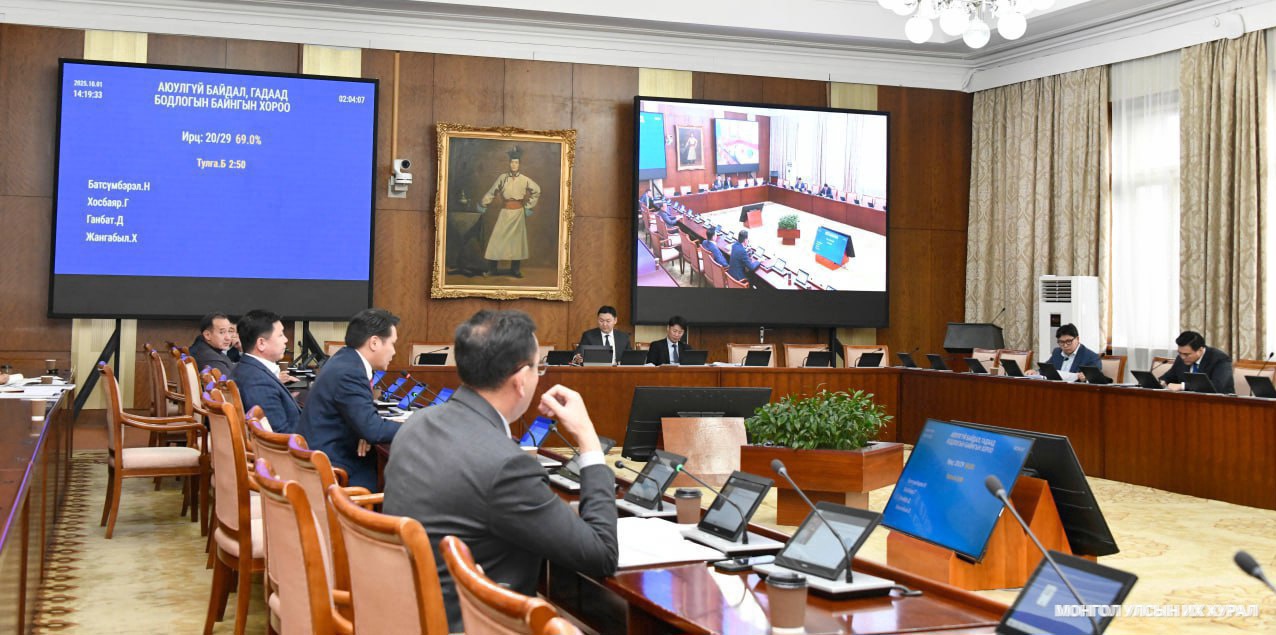 Under the Agreement on Cooperation in Pension Matters, the types of pensions will be selected based on the legal frameworks and pension systems of Mongolia and the Republic of Kazakhstan, ensuring that overlapping contribution periods in the two countries are not double-counted. This allows the aggregation of insurance periods when calculating old‑age pensions. The agreement also provides that Mongolian citizens who have participated in Kazakhstan’s funded pension scheme since 1998 may transfer their accumulated pension funds back to Mongolia.
With the ratification of this agreement, the two countries will cooperate on pension matters and ensure equal rights and obligations in their social protection systems. Importantly, it will address the current issue in which Mongolian citizens working abroad cannot count their social insurance contributions paid overseas toward their pension rights in Mongolia—leading to reduced pension amounts. The agreement establishes the legal basis to eliminate this negative outcome and strengthen social protection.
The ratification of the General Financing Program by the State Great Hural will enable improvements to the healthcare system, including expanding and modernizing nationwide emergency and intensive care infrastructure, and providing well‑equipped ambulances and mobile clinics. The program will also allow the construction of 41 new schools and kindergartens that meet required standards without increasing pressure on the state budget. Additionally, it will support the development of skilled human resources in the agricultural sector, enhance the capacity of emergency response and disaster recovery services to international standards, improve the availability of modern firefighting equipment, vehicles, and protective gear, and strengthen public disaster preparedness in cooperation with the public and private sectors.
Under the Loan Agreement between Mongolia and the European Bank for Reconstruction and Development, the National Cardiovascular Center Project will be implemented. This includes constructing a new building for the National Cardiovascular Center, upgrading its medical equipment, and organizing training programs to strengthen the capacity of cardiologists and medical staff.
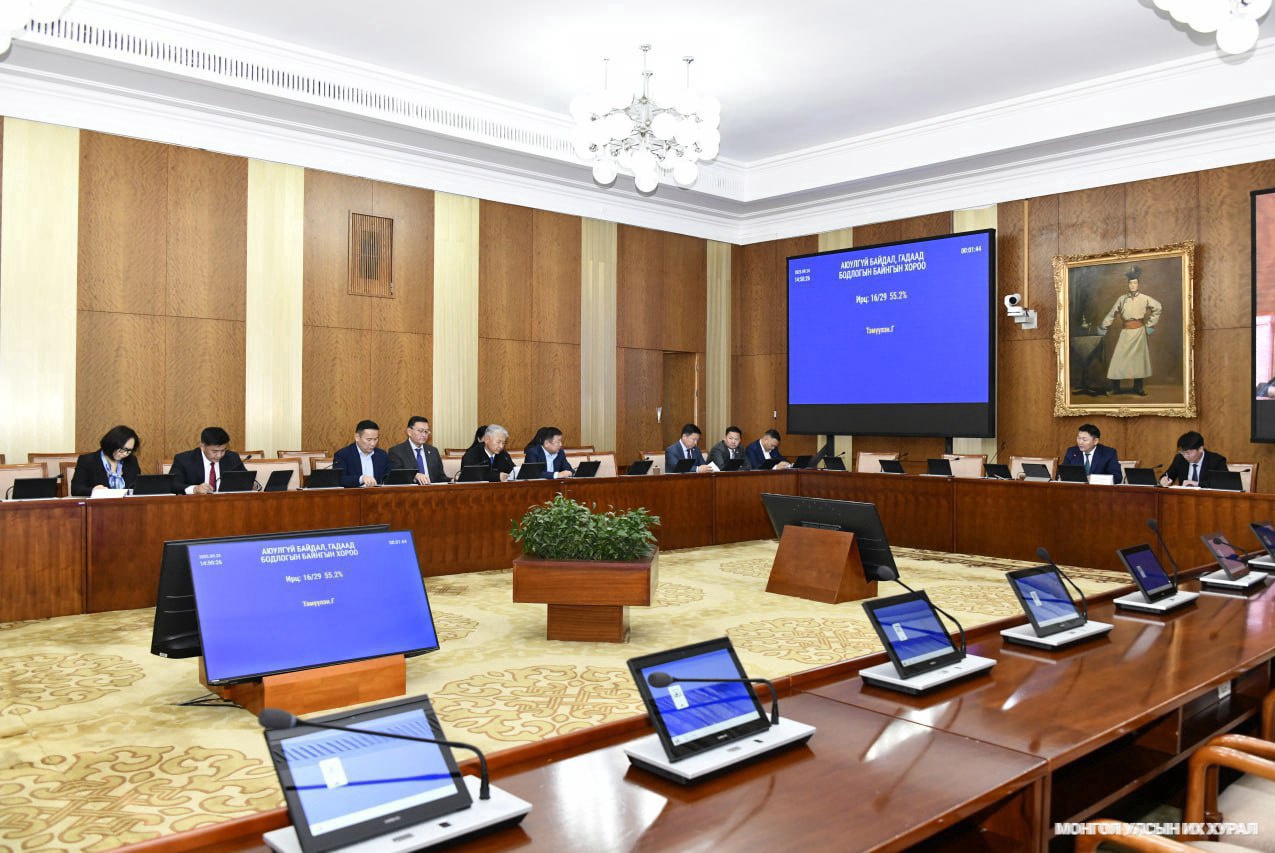
The new facility will expand cardiovascular and intravascular surgery, diagnostics, urgent care, advanced imaging services, day treatment, and rehabilitation services. It will increase the volume and range of essential medical services. The building design also separates patient, staff, and medical waste flows to improve infection control and reduce health risks, creating a safe, hygienic, and comfortable environment for both medical professionals and patients.
The Committee also heard a report from the Minister of Finance on the implementation and status of foreign loans and aid, a report from the Minister of Energy on the current state of the energy sector, energy security, related policies, measures, projects, results, and accountability to enhance public participation in legislative and oversight activities. Also, the Committee published submitted draft legislation on the D‑PARLIAMENT digital platform and collected public feedback.
Furthermore, the Chair and members of the Committee held seven official meetings with foreign delegations and relevant officials concerning matters within the Committee’s jurisdiction, according to the Press and Public Relations Department of the State Great Hural.